

Scaling GLP-1 Drugs, How Demand Is Reshaping Life Sciences Talent Models
February 20263 min read
Scaling GLP-1 Drugs, How Demand Is Reshaping Life Sciences Talent Models
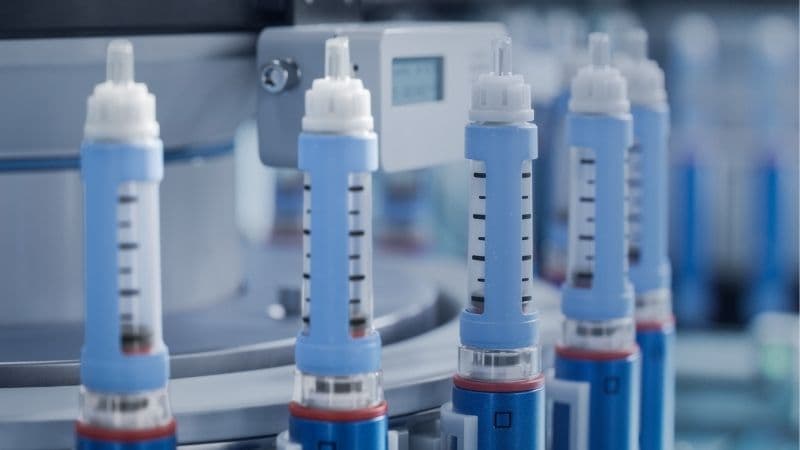
GLP-1 drugs are forcing biotech companies to rethink scale at speed. Demand for these therapies has surged in the last few years, driven by rapid adoption for diabetes and obesity treatment, and expanding therapeutic indications. The global GLP-1 drugs market is set to grow strongly over the coming decade, with forecasts suggesting the market will more than double from the mid-2020s into the 2030s.
Despite this growth, many traditional manufacturing and workforce models were not built for such rapid scale-up. While investment continues to flow into facilities and equipment, the real constraint today is talent, making scaling GLP-1 drugs more of a people problem than a capacity problem.
Companies are discovering that hiring permanent teams alone is not enough. The skills required are scarce, timelines are compressed, and pressure on existing staff is constant. Contract work and interim expertise are no longer optional. They are core to how GLP-1 drugs are made at scale.
At EPM Scientific, we work directly with biotech and pharmaceutical companies navigating this reality. What we see consistently is that organizations able to scale GLP-1 drugs successfully treat talent strategy as a core operational lever, not a downstream HR task.
Demand has outpaced traditional workforce models
GLP-1 drugs did not follow a typical biotech growth curve. Many programs moved from controlled, disease-specific use to mass demand in a short period, contributing to ongoing manufacturing and supply challenges. Shortages of GLP-1 receptor agonists have been observed in multiple regions as adoption surged faster than production capacity could expand.
The scale of the market reflects this demand surge. In 2025 alone, the global GLP-1 receptor agonist sector was valued in the tens of billions and is projected to grow at a double-digit compound annual growth rate (CAGR) through the next decade, with some estimates forecasting markets exceeding USD 300 billion by 2035.
Manufacturing teams sized for moderate output are now running at sustained high utilization. Quality, regulatory, and supply chain functions are under continuous pressure as processes evolve and capacity expands. These pressures are structural, not cyclical.
This has exposed a clear mismatch between how biotech companies traditionally hire and what GLP-1 drug manufacturing actually requires today.
Permanent hiring alone cannot close the gap
Permanent hiring remains important, but it is slow relative to the pace of demand. Experienced professionals in peptide manufacturing, biologics scale-up, GMP quality, and chemistry, manufacturing, and controls (CMC) strategy are in short supply globally.
Even when headcount is approved, recruitment timelines often extend for months. Onboarding and ramp-up add further delay. In the context of GLP-1 drugs, this lag directly impacts supply and project delivery.
Many companies reach the same conclusion. They cannot wait for ideal long-term hires when production targets are immediate. This is where contract and interim talent become essential.
Contract talent has moved into core operations
Contract work in GLP-1 drug manufacturing is no longer peripheral. Interim professionals are embedded in day-to-day operations, supporting functions that sit directly on the critical path.
Process development and Manufacturing Science and Technology (MSAT)contractors support yield improvement and process robustness while permanent teams focus on batch release and regulatory commitments. Manufacturing and automation engineers manage equipment upgrades and process changes without pulling internal staff away from live production. Quality contractors absorb documentation, validation, and deviation workloads that scale faster than permanent headcount.
This model gives companies speed and resilience. It allows them to respond to demand without overextending permanent teams or increasing compliance risk.
Experience matters more than headcount
GLP-1 drug manufacturing is unforgiving of inexperience. Small errors at scale carry outsized operational and regulatory consequences.
For this reason, many organizations prioritize experienced contract professionals over junior permanent hires in the short to medium term. A contractor who has supported multiple late-stage biologics programs can contribute immediately. They understand how scale-up behaves under pressure.
This is not a reflection of internal capability. It is a response to compressed timelines and high stakes. Contract expertise acts as a stabilizer while organizations build longer-term capability.
Where freelance demand is strongest today
Freelance demand in GLP-1 drug manufacturing concentrates where scale creates immediate operational risk. These are the functions where delays, errors, or under-resourcing directly threaten supply, compliance, or timelines.
Process development and MSAT roles are among the most requested because scale-up exposes process instability. At commercial volume:
- Yields fluctuate and parameters drift
- Small process changes have outsized downstream impact
- Permanent teams are already focused on keeping production running
Contract MSAT and process experts are brought in to troubleshoot issues, stabilize processes, and support rapid change without slowing batch release.
Manufacturing and automation engineers are another pressure point. Facilities are expanding and being retrofitted while operating close to full capacity. This often involves:
- Equipment upgrades introduced mid-production
- Automation changes that affect process control
- New production lines added under time pressure
Contractors with biologics and peptide experience help implement these changes without disrupting live manufacturing or triggering compliance issues.
Quality assurance and quality control demand rises sharply as batch volumes increase. Scaling output creates:
- Higher documentation volume
- More deviations requiring investigation
- Expanded validation and review workload
Internal QA teams often struggle to absorb this surge without delaying release or increasing inspection risk. Interim QA professionals help manage backlog, maintain GMP standards, and keep products moving to market.
Regulatory and CMC contractors are pulled in when manufacturing change outpaces submission capacity. Scale-up typically drives:
- Site expansions and tech transfers
- Process and supplier changes
- Increased regulatory filings across regions
Permanent regulatory teams can become bottlenecks under this volume of change. Experienced contractors help prepare submissions, manage agency interactions, and prevent scale-up from stalling due to regulatory lag.
Our role at EPM Scientific
At EPM Scientific, we operate inside this talent landscape every day. We specialize in life sciences recruitment, with a focus on biotech, pharma, and advanced therapies. That focus matters in GLP-1 drug manufacturing, where generalist recruitment approaches often fall short.
We support clients across permanent and contract hiring, with particular strength in interim and project-based roles. This allows us to respond to fluctuating demand and urgent requirements without compromising candidate quality.
Our networks include professionals who have worked on peptide drugs, biologics manufacturing, late-stage scale-up, and GMP environments under inspection pressure. That experience reduces onboarding time and execution risk for our clients.
We do not simply fill roles. We work with clients to design workforce models that reflect how GLP-1 drugs are actually produced today, balancing permanent teams with contract and interim expertise where it matters most.
If you are facing scale-up pressure, talent gaps, or delivery risk in your GLP-1 program, we encourage you to request a call back. A short conversation allows us to understand your challenges and advise on the talent strategy needed to keep production moving.
Contract/freelance work as a strategic tool
The most effective GLP-1 programs treat contract talent as part of their long-term operating model. This is planned flexibility, not reactive hiring.
Contract work allows organizations to scale teams up and down as demand shifts. It supports faster response to manufacturing and regulatory change. It also protects permanent staff from sustained overload, which directly affects retention.
From our perspective, this model is now standard for high-growth biologics. GLP-1 drugs have simply accelerated its adoption.
Expansion and workforce planning under constant change
Talent constraints now shape where and how companies expand GLP-1 manufacturing. Opening or scaling sites in new regions brings added risk when experienced local talent is limited, particularly in biologics manufacturing, quality, and regulatory functions.
In these situations, contract experts often play a leading role. Interim professionals support site start-up, technology transfer, and early regulatory interactions while local teams are built and trained. This approach allows companies to expand capacity without slowing production or increasing compliance risk. We regularly support clients through this phase, supplying experienced talent that can operate across sites and regions during critical periods of expansion.
At the same time, GLP-1 drugs have forced a broader shift in workforce planning. Instead of designing teams for steady-state production, companies now plan for ongoing change. That means maintaining a strong permanent core for continuity and institutional knowledge, supported by a flexible layer of contract specialists who can be deployed as demand shifts.
As a talent partner, we help clients balance these layers so short-term delivery pressures do not undermine long-term capability. This workforce model reflects how GLP-1 drugs are actually produced today and how they will continue to be scaled.
The opportunity for freelance life sciences talent
Scaling GLP-1 drugs is defined less by equipment and more by experience, flexibility, and execution under pressure.
Talent is the limiting factor. Contract work is the mechanism that allows biotech and pharmaceutical companies to keep pace with demand. At EPM Scientific, we operate at that intersection, supporting organizations that need proven expertise to scale without compromising quality or compliance.
For life sciences professionals with experience in biologics, peptide manufacturing, quality, regulatory, MSAT, or advanced manufacturing, demand is strong. Many GLP-1 programs depend on freelance and contract specialists to stabilize operations, support change, and deliver against aggressive timelines.
If you are exploring freelance life sciences roles or contract opportunities, register your resume today. We work with professionals who want flexibility, complex projects, and the chance to make a measurable impact.
The next phase of GLP-1 drug manufacturing will be driven by people who can operate at scale. We are actively supporting that workforce and continuing to build our network of experienced freelance life sciences professionals.