

Transitioning from Permanent to Contract Role in Life Sciences (1)
September 2026EPM Scientific Boston10 min read
Boston is the Largest Biotech Hub in the World

Last Reviewed: September 2026
Boston–Cambridge is the world’s leading biotech hub in 2026, home to top biotech and pharmaceutical companies and one of the fastest-growing life sciences job markets globally.
Key Insights: Boston Biotech in 2026
- Boston–Cambridge has the highest concentration of life sciences talent globally
- Home to industry leaders including Moderna, Biogen, Vertex, and Takeda
- Strong demand for clinical, regulatory, and R&D professionals across expanding biotech and pharmaceutical pipelines
- Billions in venture capital investment supporting mid- and late-stage biotech innovation
- One of the deepest and most competitive life sciences talent markets in the US
Massachusetts continues to lead the U.S. biotech industry in 2026, with Boston–Cambridge at the centre of global life sciences innovation. Sustained investment, a high concentration of leading companies, and an active clinical pipeline are driving demand for talent across regulatory, clinical operations, and R&D roles.
The Boston metropolitan area, including Cambridge, Waltham, Watertown, Lexington, and Worcester, offers one of the most concentrated biotech ecosystems in the world, attracting top life sciences talent and global investment, supported by deep scientific expertise and a long history of research-driven innovation. For both candidates and employers, this creates a highly competitive but opportunity-rich market, even as hiring patterns stabilise following the rapid expansion seen earlier in the decade.
Top Biotech Companies in Boston
The Boston–Cambridge biotech hub includes some of the world’s most recognised life sciences companies, alongside a fast-growing pipeline of innovative startups. The region is home to a large number of established biotech and pharmaceutical organisations, as well as a growing ecosystem of emerging firms.
Some of the most well-known companies in the Boston biotech market include:
- Moderna – a biotechnology company focused on mRNA-based therapeutics and vaccines
- Biogen – a global biopharmaceutical company specialising in neurological and neurodegenerative diseases
- Vertex Pharmaceuticals – known for its work in cystic fibrosis and genetic therapies
- Takeda – a global pharmaceutical company with a significant research and development presence in the Boston area
- Alnylam Pharmaceuticals – a leader in RNA interference (RNAi) therapeutics
- Blueprint Medicines – focused on precision therapies for cancer and rare diseases
These organisations represent just a portion of the broader Boston biotech ecosystem, which also includes a wide range of mid-sized companies, venture-backed start-ups, and research-driven spinouts across the life sciences sector.
A Market That Has Evolved Rather Than Slowed
Boston’s biotech sector has continued to build on more than a decade of expansion, and the impact of that growth is still very visible across the region.
$3.45bn
Venture capital raised by Massachusetts-headquartered biopharma companies in H1 2026
17%
Of the US biopharma drug development pipeline is in Massachusetts
Massachusetts remains one of the most concentrated life sciences markets in the country, but hiring is more selective than it was during the post-pandemic expansion. MassBio’s 2026 Industry Snapshot reported 113,503 biopharma jobs in the state in 2025, a 3.1% decrease year on year. This does not mean opportunity has disappeared. Organizations with funded or advancing programs are still competing for people who can move clinical, regulatory and manufacturing work forward.
Boston-Cambridge continues to have the deepest life sciences R&D talent pool in the US, accounting for nearly 13% of core R&D roles nationally. It also ranks first in the country for life sciences manufacturing talent. CBRE’s Life Sciences Talent Trends report highlights the depth of the local market, but that density also makes it competitive for employers hiring experienced clinical, regulatory, CMC and program leadership professionals.
Job volumes have settled from their 2021 peak, but there remains a clear gap for specialist talent with practical experience in clinical-stage and late-stage environments. Candidates who can work across functions, manage external partners or lead complex development programs are particularly valuable.
Investment and Innovation in Massachusetts
Massachusetts companies continue to advance significant drug development pipelines, even as investors have become more selective. MassBio’s 2026 Industry Snapshot found that the state’s biopharma pipeline now represents 17% of the US total, with advanced modalities accounting for 26% of programs.
Massachusetts-headquartered companies raised $3.45 billion in venture capital in the first half of 2026, up 25% year on year and representing a quarter of all US biopharma VC. The market also saw eight IPOs and 11 company acquisitions during the same period.
This is not a return to blanket hiring across every function. Instead, investment and hiring are increasingly concentrated around companies with advancing clinical programs, differentiated platforms and clear development milestones. That continues to support demand for experienced regulatory, clinical operations, CMC, quality and program leadership talent across the Boston-Cambridge cluster.
The Skills That Continue to Shape Hiring in Massachusetts
Massachusetts benefits from a concentration of research institutions that few regions can match. The presence of MIT, Harvard, the Broad Institute and several of the highest NIH‑funded hospitals in the United States, has shaped the local talent market in very specific ways.
remains one of the most competitive functions for biotech and biopharma companies in Massachusetts. The region’s concentration of clinical‑stage programs means hiring teams prioritize candidates who can keep development on track and prevent delays at key milestones. Companies are looking for people who can:
- Lead submissions: Prepare and manage INDs, CTAs, and NDAs, coordinate responses to agency queries, and ensure documentation is complete and compliant on the first pass.
- Guide regulatory strategy: Advise on development pathways, label, safety considerations, and regulatory expectations across early‑ and late‑stage programs.
- Work across multiple regions: Support U.S. submissions while coordinating parallel activities in the EU, UK, and other major markets, particularly for companies building their first global strategy.
Candidates with experience in oncology, rare diseases, or advanced modalities such as cell and gene therapies remain in especially high demand across the Boston–Cambridge cluster. These programs often carry more complex CMC and safety considerations, making experienced regulatory talent crucial to progressing timelines smoothly.
Clinical operations continues to be one of the most consistent hiring areas across the state, largely driven by the number of Massachusetts‑based companies running Phase I–III studies simultaneously. Employers want candidates who can:
- Run trials end‑to‑end: Oversee Phase I–III studies from start‑up through close‑out, ensuring accuracy, compliance, and efficiency throughout.
- Manage CROs and sites effectively: Monitor vendor performance, resolve bottlenecks before they impact timelines, and maintain accountability across multiple partners.
- Solve operational issues quickly: Identify risks early, intervene before site problems escalate, and ensure patient recruitment and data collection remain on track.
Companies in Boston and Cambridge, in particular, value candidates who have operated within lean teams and can take responsibility for several studies at once. Experience working in fast‑paced biotech environments is a strong differentiator, especially where teams manage multiple therapeutic areas or run first‑in‑human trials.
As more Massachusetts companies advance assets into the clinic, program and project leadership roles have become essential. Organizations need people who can connect scientific, operational, and commercial planning across multiple programs. Typical hiring needs include:
- Program leaders: Oversee assets from preclinical to clinical stages, maintain accountability for milestones, and ensure each function understands deliverables and timelines.
- Project managers: Coordinate cross‑functional teams, track progress across CMC, clinical, regulatory, and research, and keep communication consistent.
- Portfolio and strategic operations: Support leadership with program prioritization, resource planning, and long‑term development strategy.
These roles are especially important in Boston–Cambridge, where many companies are running several clinical assets concurrently. Strong program leadership directly impacts how quickly companies can generate data, prepare submissions, and raise capital.
Alongside core R&D, companies across Massachusetts continue to hire for scientific roles that support development and clinical decision‑making. These include:
- Biomarker and translational specialists: Professionals who can link preclinical findings with clinical endpoints, guide assay development, and support patient‑selection strategies.
- Medical and scientific affairs: Individuals who can support publications, manage investigator relationships, and communicate scientific updates internally and externally.
- Quality and compliance talent: Experts who ensure GxP standards are met throughout development, especially as companies transition into later‑stage clinical or early manufacturing activities.
These positions remain challenging to fill because they require a balance of scientific expertise, operational judgment, and the ability to work effectively in smaller cross‑functional teams. Companies in Boston’s biotech sector often seek candidates who can support both strategic discussions and hands‑on execution.
For candidates, this combination of roles offers strong career progression opportunities. For employers, it underscores why Boston remains one of the most competitive markets for experienced scientific and development talent.
Salary trends and compensation in Boston biotech
Boston consistently ranks among the top U.S. markets for life sciences wages. Compensation remains highest for regulatory, clinical leadership, and experienced CMC professionals, reflecting the scarcity of talent in these areas. Many mid‑stage biotechs are also offering equity or long-term incentives to attract and retain key hires, making total rewards a major consideration for both candidates and employers.
Explore compensation trends for every key function.
Our latest Life Sciences Salary Guides break down current pay ranges across regulatory affairs, clinical operations, CMC, quality, R&D, and more. They are ideal for hiring managers planning headcount or for candidates benchmarking their next move.
What hiring looks like in Massachusetts biotech in 2026
Selective hiring is expected to continue. Employers are prioritizing candidates who can operate across multiple functions and bring deep technical expertise. Contract and interim roles remain common in clinical and regulatory areas, while biomanufacturing and quality hiring is increasingly tied to late-stage assets rather than early-stage R&D. Candidates with experience managing complex programs across multiple therapeutic areas will continue to have the strongest opportunities.
Boston: a market built for talent and development
For biotech and biopharma professionals, Boston offers one of the most active and competitive career markets in the country. The Boston-Cambridge cluster brings together global biopharma companies, venture-backed start-ups and research institutions working across discovery, clinical development, manufacturing and commercialization. Opportunities span early discovery through late-stage development, although employers are increasingly selective about the specialist experience they need.
For employers, the environment is competitive and highly selective. Companies that succeed here tend to move quickly, communicate clearly, and offer compelling reasons for candidates to join their teams. Access to experienced leadership, proximity to academic research, and a concentration of development-stage programs all contribute to why so many organizations choose to scale in the Boston–Cambridge area.
This mix of opportunity, expertise, and infrastructure is what keeps Boston at the center of U.S. biotech and biopharma innovation. For professionals considering a move, the region offers a strong balance of career progression, academic and medical institutions, and a community built around scientific progress.
Mapping Massachusetts Biotech
To visualize the density and distribution of life sciences companies across the state, the map below highlights key hubs within Massachusetts, including Boston, Cambridge, Waltham, Watertown, Lexington, and Worcester. This overview provides a clear sense of where talent and opportunities are concentrated.
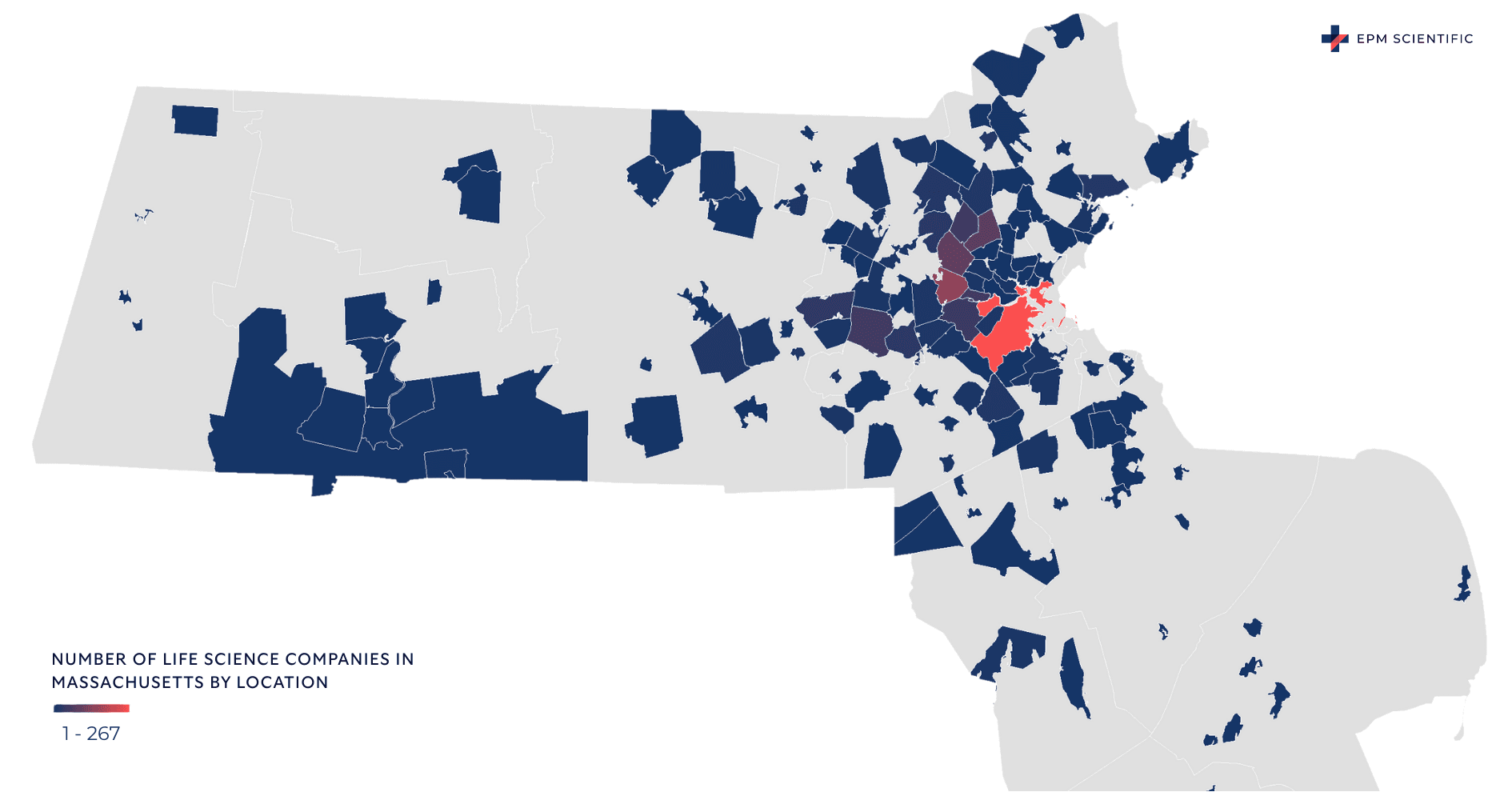
Image: Key biotech and biopharma hubs across Massachusetts, showing the concentration of companies driving life sciences innovation in Boston, Cambridge, Waltham, and surrounding areas. Data compiled from publicly available company information.
Supporting your next step in Boston’s biotech community
Whether you’re hiring or exploring new opportunities, having a partner who understands the market makes a real difference. As a specialist in biotech and biopharma recruitment, we work closely with companies and candidates across Massachusetts to match the right skills with the right roles.
For organisations, we help secure the regulatory, clinical and program talent needed to keep development moving. For candidates, we provide insight into the market, support through the hiring process and access to roles that align with their experience and ambitions.
If you’re planning your next move or building out a team, you can explore current openings across Massachusetts or speak with us about upcoming opportunities. Our goal is to help you navigate one of the most active biotech markets in the country with clarity and confidence.
FAQs: Boston & Massachusetts Biotech 2026
Massachusetts, particularly the Boston–Cambridge cluster, leads the U.S. biotech industry due to its concentration of research institutions, experienced talent, strong venture investment, and a dense pipeline of mid- and late-stage life sciences programmes. The region accounts for nearly 13% of all U.S. life sciences R&D roles.
Regulatory affairs, clinical operations, program and project leadership, and development-adjacent scientific roles remain highly sought after. Candidates with experience in oncology, rare diseases, cell and gene therapies, or managing complex programs across multiple therapeutic areas have the strongest opportunities.
While overall hiring has stabilised since the post-2020 surge, selective recruitment continues. Employers prioritise candidates who can work across multiple functions, and contract or interim roles are common in clinical, regulatory, and biomanufacturing functions tied to late-stage assets.
Boston consistently ranks among the top U.S. markets for life sciences salaries. Compensation is highest for regulatory, clinical leadership, and experienced CMC professionals, with many mid-stage companies offering equity or long-term incentives to attract and retain key talent.
Massachusetts biotech companies raised 197 funding rounds in 2025, representing over a quarter of all U.S. biopharma venture capital. Early 2026 data shows start-ups in the Boston area raised $1 billion in January alone, reflecting continued investor confidence and a strong pipeline of innovative programs.
The major hubs include Boston, Cambridge, Waltham, Watertown, Lexington, and Worcester. These areas host the highest concentration of life sciences companies, offering access to specialised talent, cutting-edge research, and investment opportunities.