

August 20262 min read
The Race For Biologics Manufacturing Capacity
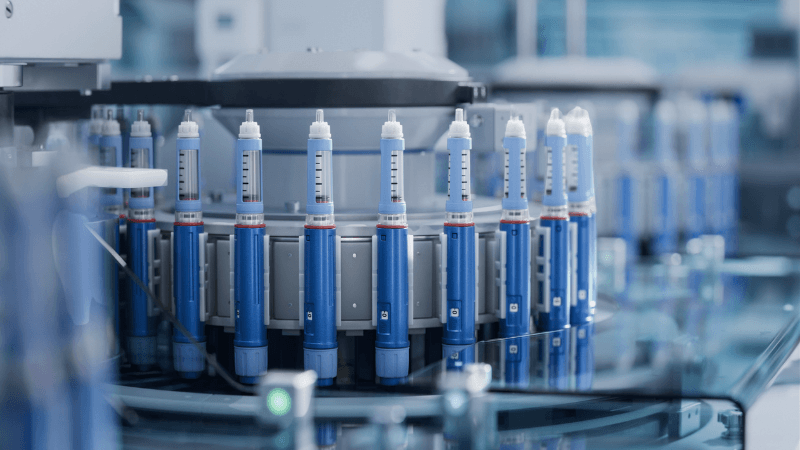
AGC Biologics recently announced a commercial manufacturing agreement 'worth hundreds of millions of dollars', with a global pharmaceutical company committing approximately half of the mammalian manufacturing capacity at its new Yokohama facility before the site has even begun operations.
The agreement is significant for AGC Biologics, but it also reflects a much broader trend across the life sciences industry. As demand for biologics continues to grow, manufacturers are investing in capacity earlier, diversifying supply chains and securing long-term partnerships that strengthen commercial resilience.
For employers across pharmaceuticals, biotechnology and contract development and manufacturing organizations (CDMOs), the announcement is another indication that manufacturing strategy and workforce planning are becoming increasingly interconnected.
Key takeaways
- Major biologics manufacturers are securing commercial capacity years before facilities become operational.
- Supply chain resilience continues to influence manufacturing investment decisions.
- Commercial manufacturing growth is driving increased demand for specialist manufacturing talent.
- Organizations that plan workforce requirements early are often better positioned to support long-term expansion.
Capacity has become a strategic advantage
One of the most notable aspects of AGC Biologics' announcement is the timing. Rather than waiting until the Yokohama facility becomes operational, a global pharmaceutical company has already secured approximately half of its available mammalian manufacturing capacity.
This demonstrates the growing importance of securing manufacturing capability well in advance. As biologics pipelines mature and commercial products move towards launch, organizations are increasingly seeking certainty over manufacturing availability.
At the same time, geopolitical uncertainty and evolving regulatory requirements continue to encourage pharmaceutical companies to diversify manufacturing locations. Japan's established regulatory environment, highly skilled workforce and strong infrastructure make it an attractive destination for commercial biologics production, particularly for organizations looking to strengthen supply chain resilience.
Commercial readiness starts long before launch
Facilities may take years to design, build and validate, but commercial success depends on more than physical infrastructure.
Bringing a manufacturing site online requires experienced professionals across manufacturing operations, manufacturing science and technology (MSAT), engineering, validation, quality and supply chain functions. Without these teams in place, even the most advanced facilities can struggle to achieve operational readiness.
As investment in biologics manufacturing accelerates globally, organizations are recognizing that workforce planning should begin alongside facility planning, rather than after construction is complete.
According to Daniel Howells, Consultant at EPM Scientific:
This announcement highlights how manufacturers are planning for commercial production years ahead of demand. While securing manufacturing capacity is a critical part of that strategy, securing the right people is equally important. Organizations that invest in workforce planning early are often better positioned to scale operations successfully and maintain a competitive advantage as facilities move towards commercial readiness.
What this means for hiring
Announcements like this often signal future hiring activity across the market. Organizations typically increase recruitment across several specialist disciplines, including:
- Manufacturing Operations
- Manufacturing Science and Technology (MSAT)
- Process Engineering
- Automation Engineering
- Validation and Commissioning
- Quality Assurance and Quality Control
- Supply Chain and Logistics
- Site Leadership
Competition for experienced professionals in these areas has remained strong across many global markets. Employers that engage with workforce planning early are generally better positioned to attract and retain specialist talent before demand peaks.
A wider trend across biologics manufacturing
AGC Biologics' latest agreement reflects a broader trend across the biologics sector. As CDMOs and pharmaceutical manufacturers expand commercial manufacturing capacity, organisations are also diversifying production networks to strengthen supply chain resilience and support future demand.
As investment continues, competition will extend beyond manufacturing capacity to the specialist scientists, engineers and manufacturing professionals needed to bring these facilities online. For employers, workforce planning is becoming just as important as investment in facilities and technology.
Planning for future manufacturing growth?
Whether you're expanding commercial manufacturing capacity, launching a new facility or strengthening an existing operation, having the right people in place is essential for long-term success.
EPM Scientific partners with pharmaceutical companies, biotechnology organizations and CDMOs to help build high-performing manufacturing teams across operations, engineering, quality, validation and technical functions.
Get in touch with our manufacturing recruitment specialists to discuss your hiring strategy or explore the latest trends shaping the biologics manufacturing workforce.
Find the talent you need
Get in touch with one of our life sciences specialists who will be able to offer bespoke guidance on hiring.
Looking for a new role?
Start your search today and take the next step in your career. Browse life sciences roles at industry-leading firms with EPM Scientific.